

How to Choose a Renovation Contractor in Toronto: 9 Questions
The best way to choose a renovation contractor in Toronto is to ask every contractor the same nine questions — about licensing and insurance, recent local references, written itemized quotes, permits, timelines, payment schedules, change orders, and warranty — and to compare their answers in writing before you sign anything. How to choose a renovation contractor in Toronto is not about finding the lowest price or the friendliest salesperson. It is about finding a company that answers specific questions clearly, puts those answers in a contract, and has finished similar work, recently, in homes like yours.
This guide gives you the nine questions, explains what a good answer sounds like, and flags the answers that should send you back to your search.
Why Choosing the Right Contractor Matters More in Toronto
A renovation is one of the largest purchases most homeowners make, and in Toronto the stakes are higher than in many cities. Labour and material costs are high, older homes hide expensive surprises, condos add board approvals and strict working rules, and a project that goes wrong can leave a kitchen or bathroom unusable for weeks longer than promised.
Most renovation disasters follow the same pattern: a verbal quote, a large deposit, no permits, constant “extras,” and a contractor who becomes hard to reach once demolition is done. Asking the right questions before you sign breaks that pattern — a contractor who cannot answer clearly at the start rarely becomes clearer once your walls are open.
The 9 Questions to Ask Every Toronto Renovation Contractor
1. Are You Licensed, Insured, and Covered by WSIB?
This is the first filter, and it is non-negotiable. Ask for the company’s legal business name, its liability insurance, and its WSIB (Workplace Safety and Insurance Board) status if it has employees or brings workers into your home. A legitimate contractor can show you insurance documentation and explain, in plain language, who is covered if a worker is injured on your property or if accidental damage happens to your home or a neighbour’s.
Good answer: documents are provided without hesitation, the business name on the insurance matches the name on your contract, and the contractor explains which trades carry their own coverage. Red flag: “We don’t need insurance for a small job,” requests that you pull permits in your own name to “save money,” or pressure to pay cash with no paperwork — which leaves you with no record and no recourse.
2. Can I See Recent Projects Like Mine — and Speak to Those Clients?
Photos from five years ago and reviews with no project details tell you very little. Ask for two or three recent projects in Toronto or the GTA that are similar to yours in type and budget, and ask whether you can speak with one of those clients. Contractors who finish work on time and on budget are usually proud to connect you.
When you speak to a reference, ask three things: Did the final price match the contract? Did the crew show up when they said they would? And would you hire them again? A hesitant pause on the last question tells you more than any star rating.
3. Who Will Actually Do the Work in My Home?
The person quoting your project is rarely the person swinging the hammer. Ask who manages the job day to day, which parts are done by the contractor’s own crew, and which go to subcontractors — plumbing, electrical, and HVAC work is often handled by licensed trade partners. There is nothing wrong with subcontractors; problems start when nobody will say who is responsible for scheduling them and checking their work.
Good answer: a named site lead or project contact, a clear explanation of which trades are in-house and which are partners, and one person who answers to you for the whole job. Red flag: “We hire whoever is available” with no named person accountable for quality.
4. Will You Give Me a Written, Itemized Quote and a Real Contract?
A single round number on a text message is not a quote. A proper quote breaks the project into lines — demolition, materials, each trade, fixtures, permits, and disposal — so you can see exactly what is included and, just as importantly, what is not. If one quote is $10,000 lower than the others, the itemized version usually shows why: something the other contractors included has quietly been left out, and it tends to reappear later as an “extra.”
The contract itself should name both parties, describe the scope, state the price and what triggers any change to it, and set out the payment schedule and warranty terms below. If a contractor will not put it in writing, do not let them start demolition. Verbal promises are worth nothing the first time a project hits a problem.
5. Who Handles Permits, Inspections, and Condo Approvals?
In Toronto, many renovations need a City building permit — structural changes, plumbing moves, and basement work are common examples — and electrical work is overseen separately by the Electrical Safety Authority (ESA). Condo renovations usually also need written board approval, with rules about working hours, elevator bookings, and insurance certificates.
Ask directly: Does my project need a permit? Who prepares the drawings and submits the application? Who books inspections, and what happens to the schedule if an inspection fails? A knowledgeable contractor answers these questions specifically for your project, not with a wave and “we’ll figure it out.” Homeowners planning a basement renovation in particular should hear a clear permit answer, because finished basements are one of the most commonly inspected — and most commonly unpermitted — projects in the city.
6. What Is the Timeline — and What Could Change It?
Ask for a start date, an estimated completion window, and the sequence of work: demolition, rough-ins, inspections, finishes, and final walkthrough. Then ask the more useful question: what are the two or three things most likely to delay this job? Honest answers include inspection scheduling, custom materials such as cabinets or glass, and surprises found after opening walls in older Toronto homes.
Be cautious of the fastest promise in the room. A contractor who says a full bathroom can be finished in a few days may be planning to skip steps you cannot see — waterproofing, curing times, and inspections all take real time. A realistic timeline in writing is worth more than an optimistic date that slips every week.
7. How Does the Payment Schedule Work?
How you pay matters as much as how much you pay. A reasonable schedule ties payments to completed milestones — for example, a modest deposit, a payment after demolition and rough-in work passes inspection, a payment when finishes are installed, and a final payment after the walkthrough, when the work is actually complete. Each payment should follow finished work, not precede it by weeks.
Red flags: a demand for most of the money up front, cash-only pricing, or payments requested before the matching stage is done. Never let payments get far ahead of the value of the work completed in your home. If a contractor disappears mid-project — and it happens — the gap between what you have paid and what you have received is your real loss.
8. How Do You Handle Changes and Unexpected Problems?
Almost every renovation involves at least one change: you upgrade a finish, or demolition reveals old wiring, hidden water damage, or a floor that is not level. The question is not whether changes will happen, but how they are priced and approved. The professional standard is a written change order — a short document describing the extra work, its exact cost, and its effect on the timeline — signed by you before the extra work begins.
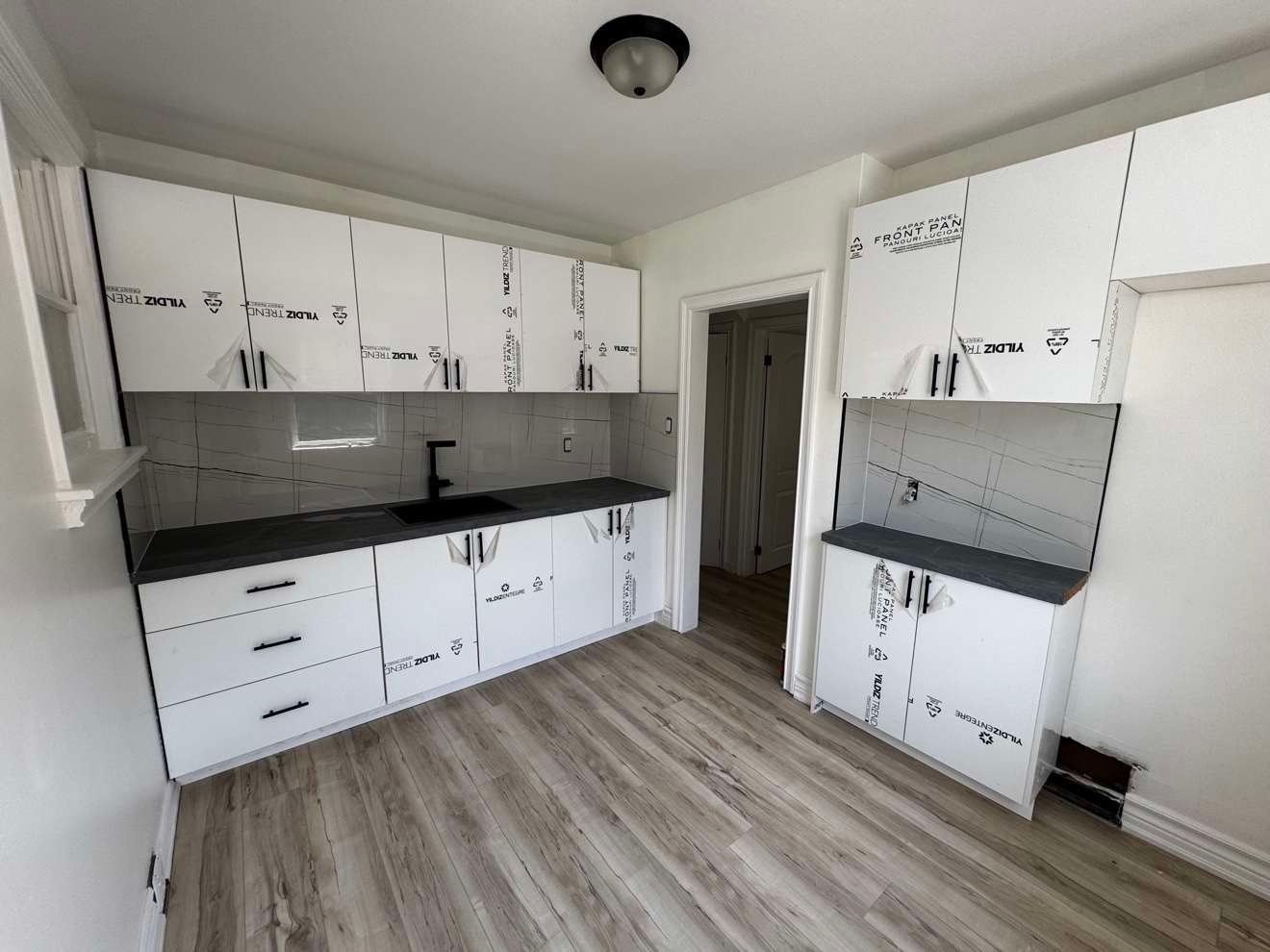
Ask what happens if they find a problem behind a wall: Will they show you photos, explain your options, and price the fix before proceeding? This matters enormously in a kitchen renovation, where opening one wall can reveal decades of plumbing and electrical shortcuts. A contractor who prices surprises transparently protects your budget; one who says “we’ll sort it out at the end” is asking for a blank cheque.
9. What Warranty Do You Offer — and What Happens If Something Goes Wrong After?
Finally, ask what is covered after the final payment: How long is the workmanship warranty? Which products carry manufacturer warranties? If a grout line cracks or a fixture leaks two months later, who do you call, and how quickly do they come back?
Get the warranty in the contract, in writing, with a duration and a contact method. A company that plans to stand behind its work says so on paper. A company that answers this question vaguely is telling you, in advance, how your warranty claim will go.
How to Compare Contractors Side by Side
Once you have answers from two or three contractors, compare them on the same points — not on the headline price alone. This simple table shows what to line up:
| Compare This | Strong Sign | Warning Sign |
|---|---|---|
| Quote format | Written and itemized, same scope as the others | One round number, verbal or by text |
| Insurance and WSIB | Documents shown, names match the contract | “Not needed for this job,” cash with no paperwork |
| References | Recent, local, similar projects you can call | Old photos only, no clients you can speak to |
| Permits | Explains what your project needs and who files it | Suggests skipping permits to save time or money |
| Payment schedule | Tied to completed milestones | Most of the price demanded up front |
| Change orders | Written and approved before extra work starts | “We’ll add it up at the end” |
| Warranty | In the contract, with a duration and contact | Verbal assurance only |
If the lowest quote wins on price but loses on most rows of this table, it is not actually the cheapest option — it is the riskiest one, and the difference usually arrives later as extras, delays, or repairs.
A Note on Price: The Middle Quote Is Often the Honest One
Homeowners are often told to get three quotes and pick the middle one. That advice is imperfect, but it exists for a reason: the lowest quote frequently leaves out work the project genuinely requires, while the highest sometimes prices in finishes you did not ask for. What matters is the reasoning — ask each contractor to walk you through their price line by line. The one who can explain every line calmly is usually the one who has actually thought about your project.
This is doubly true for projects with hidden conditions. A bathroom renovation, for example, can look simple at the surface while hiding the real cost in waterproofing, plumbing condition, and ventilation — items a careful contractor includes up front and a careless one “discovers” after your deposit is spent.
Before You Sign: A Five-Minute Checklist
- Everything is in writing — scope, price, payment schedule, timeline, and warranty, all in one signed contract.
- The names match — the business name is the same on the quote, contract, and insurance documents.
- Permits are assigned — you know what is required and who is responsible for applications and inspections.
- Payments follow progress — no stage is paid for long before the work for that stage is complete.
- You spoke to a past client — and asked whether they would hire this contractor again.
If a project is part of a larger home renovation, run the same checklist for the whole scope, not just the first room — the contract, permits, and payment schedule should cover the full plan you have agreed to.
Frequently Asked Questions
How many quotes should I get before choosing a renovation contractor in Toronto?
Two or three written, itemized quotes is the practical range for most projects. That is enough to see the realistic price band for your scope and to compare how each contractor answers the same questions. More than four or five usually adds confusion rather than information.
What is a reasonable deposit for a renovation in Toronto?
A modest deposit to secure your start date and order initial materials is normal, with the rest of the price tied to completed milestones and a final payment after the walkthrough. Be cautious of any contractor who wants most of the contract price before work begins — your payments should never get far ahead of the finished work in your home. All figures and schedules should be written into the contract before you pay anything.
Should my contractor be licensed in Toronto?
Ask every contractor for their business registration, liability insurance, and WSIB status, and make sure the names match across all documents and your contract. Individual trades such as electricians and plumbers carry their own Ontario licensing, and electrical work is overseen by the Electrical Safety Authority. A contractor who provides documentation without hesitation is showing you how they run every part of their business.
How do I check a Toronto renovation contractor’s reputation?
Combine three sources: online reviews (read the detailed ones, including how the company responds to complaints), recent local references you can actually call, and photos of finished projects similar to yours. Then weigh the contract itself — a detailed written quote, a milestone payment schedule, and a stated warranty are reputation you can enforce.
What are the biggest red flags when hiring a contractor?
The most serious are: no written contract or itemized quote, a large payment demanded up front, cash-only pricing with no paperwork, pressure to skip required permits, no insurance documents, and an inability to provide recent references. Any one of these is a reason to pause; two or more together are a reason to walk away, however attractive the price sounds.
How long should I take to decide on a contractor?
Long enough to get itemized quotes, check documents, and speak to a reference — for most homeowners, about one to two weeks of active comparison. Urgency pressure (“this price is only good today”) is itself a warning sign on a purchase of this size. A professional contractor’s quote should remain valid for a stated period, typically long enough for you to compare it properly.
Get Straight Answers — and a Free Quote
Ask us these nine questions. At Shahkar Renovation, we are glad to answer every one of them in writing: itemized quotes, a clear contract, milestone-based payments, permits handled properly, and a warranty we stand behind — for kitchens, bathrooms, basements, and full-home projects across Toronto and the GTA.
Contact Shahkar Renovation for a free quote. Call us at +1 647 504 4646 and tell us about your project. New clients receive 10% off their first project — ask about the offer when you call.
We will walk you through our price line by line and put it all in writing before any work begins — exactly what this guide tells you to demand from any contractor, including us.

No comment